

Talking to Old People
My mother and dementia.

Knoxville author Laura Mansfield has a book titled Geezer Stories: The Care and Feeding of Old People. I haven’t read it yet, because when I ordered it the other day Helen snatched it up to start reading it ahead of me. (This happens a lot).
But as some of you know, I’ve been dealing with my mother’s dementia, which has progressed pretty rapidly. It comes and goes day to day, and sometimes hour to hour, but the overall trend is clearly downward. A year ago she was driving herself around, keeping her own house, and had just done her own taxes. This year she can’t do any of those things. She’s now in a memory care facility, which she sometimes thinks is a school dormitory (that’s good) and sometimes realizes is what it is, which isn’t so good.
I visit her and take her out to lunch regularly, and she gets visits from my siblings and her grandkids frequently. (According to the staff, she gets more visits than most of the patients there — my mom sometimes calls them “inmates” in her darker moments — get put together.) But it’s hard on her, and she often wakes up not knowing where she is, and being disoriented in general.
My brother and sister recently came up with what turned out to be a terrific idea. They got a digital picture frame (I think it’s this one) and loaded it up with family pictures. She loves seeing them go by, and will tell you the whole background of each one. (That part of her memory still works, and I think that makes her feel good about herself).
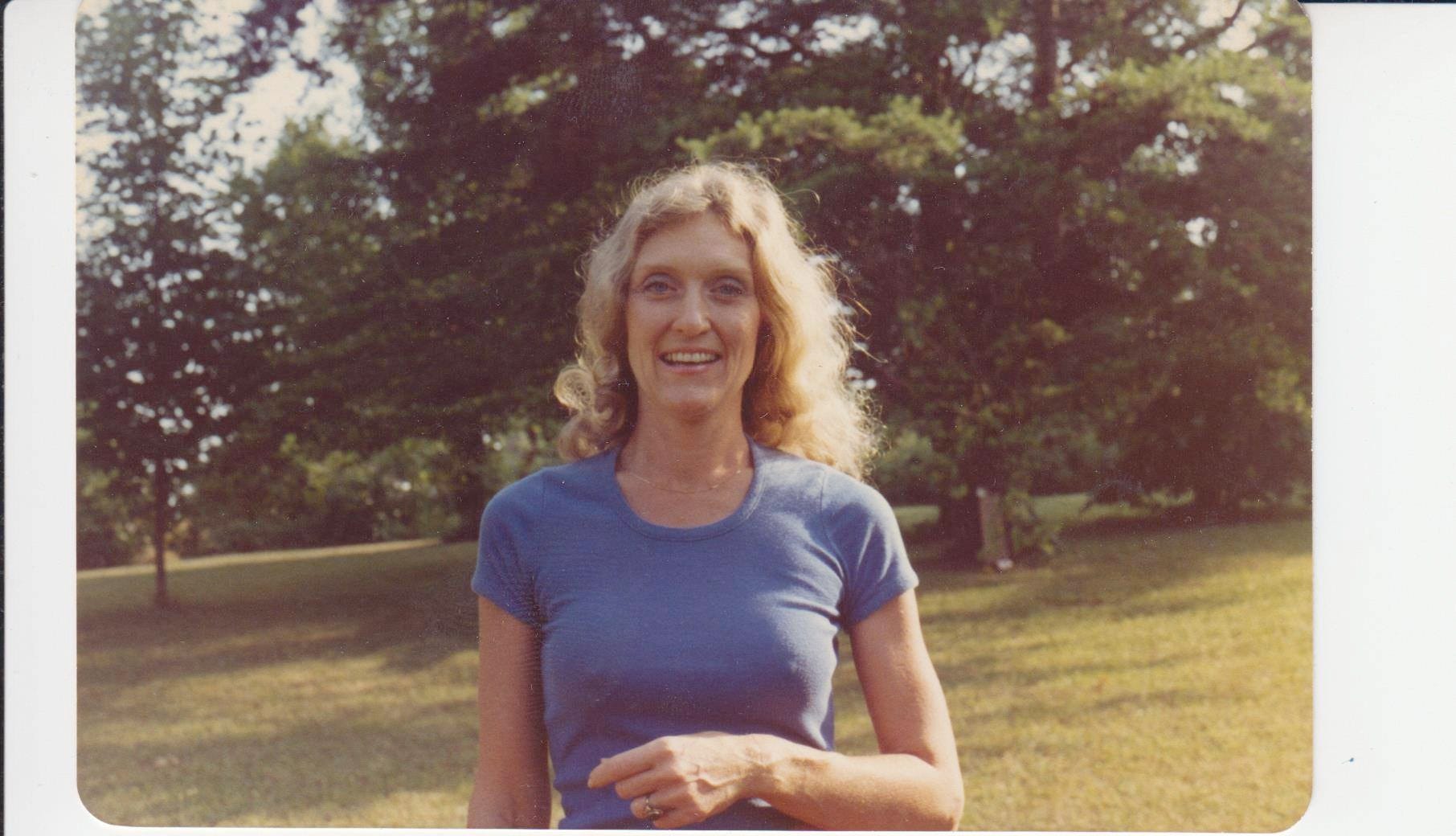
My mom at about age 40.
She especially likes to pictures of herself when she was young and pretty, which she remained for quite a while. It’s been one of the best things we’ve done for her — the other being sending in a caregiver/companion a few days a week who, like my mom, is a fan of 1920s hot jazz, which they can discuss endlessly.
It’s hard to see her decline. Even ten years ago (she’s 86, almost 87 now) she was tall and straight and together. Now a woman who used to run her own computer network has trouble using a phone, even the special dementia-friendly phone we got her, and the TV remote is nearly beyond her. But, you know, the real her is still in there somewhere. She appreciates the attention and the company, and I’ve used my clout at the facility — which basically consists just of asking, I don’t think most patients there have family members who are that hands-on — to make sure she gets coffee first thing in the morning, extra portions at breakfast, and to stay on top of her medical care, physical therapy, and the like. The place is very good, heavily staffed with nice competent people, but even more than a regular hospital, patients do much better with an advocate who, you know, doesn’t have anything wrong with them and can deal with the system.
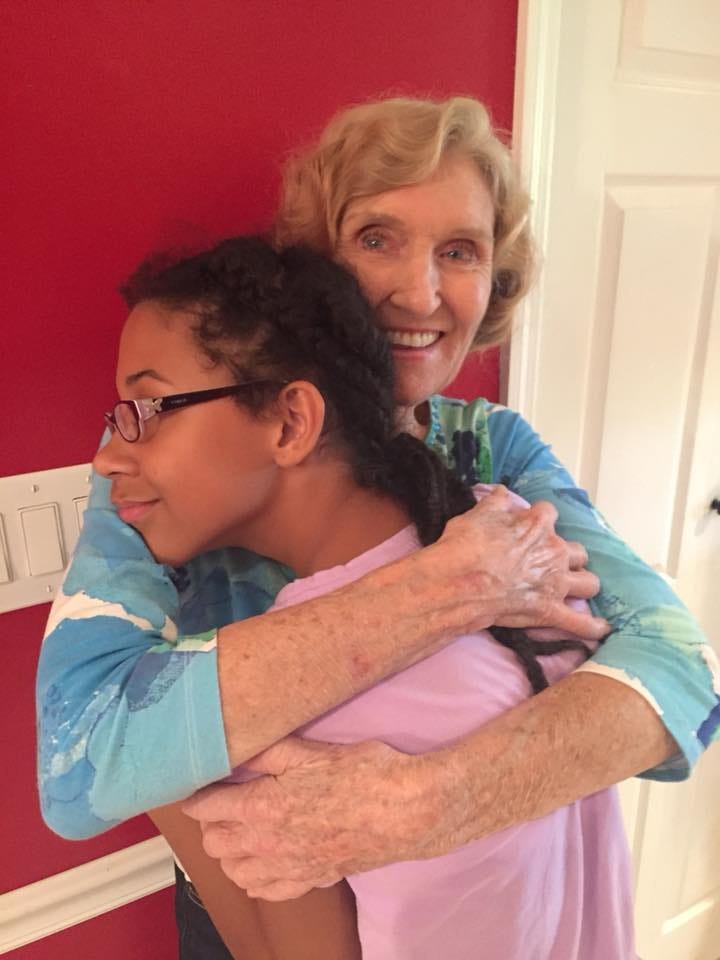
My mom with my niece Ojie about a decade ago.
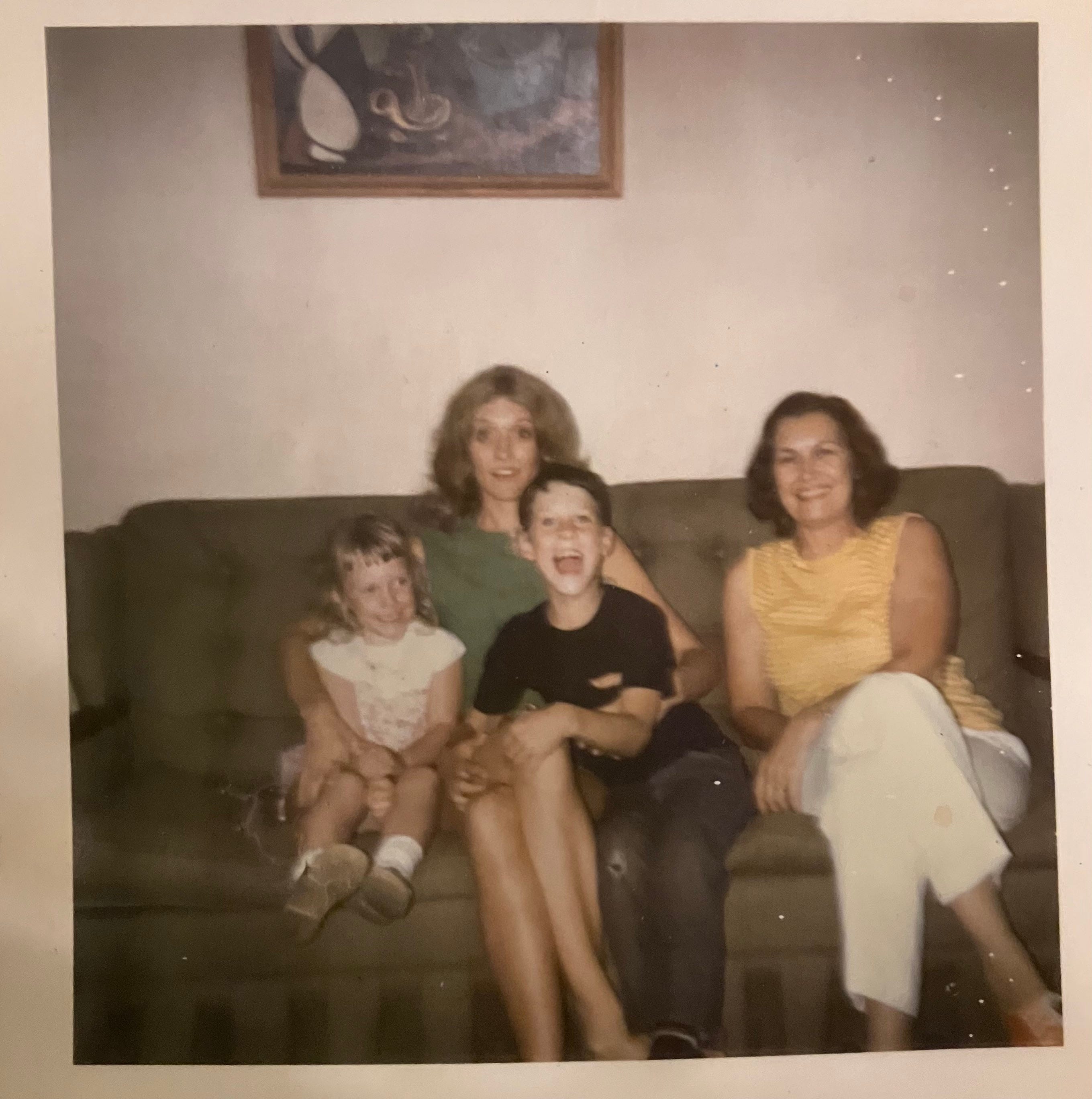
With my brother, sister, and grandmother, around 1974.
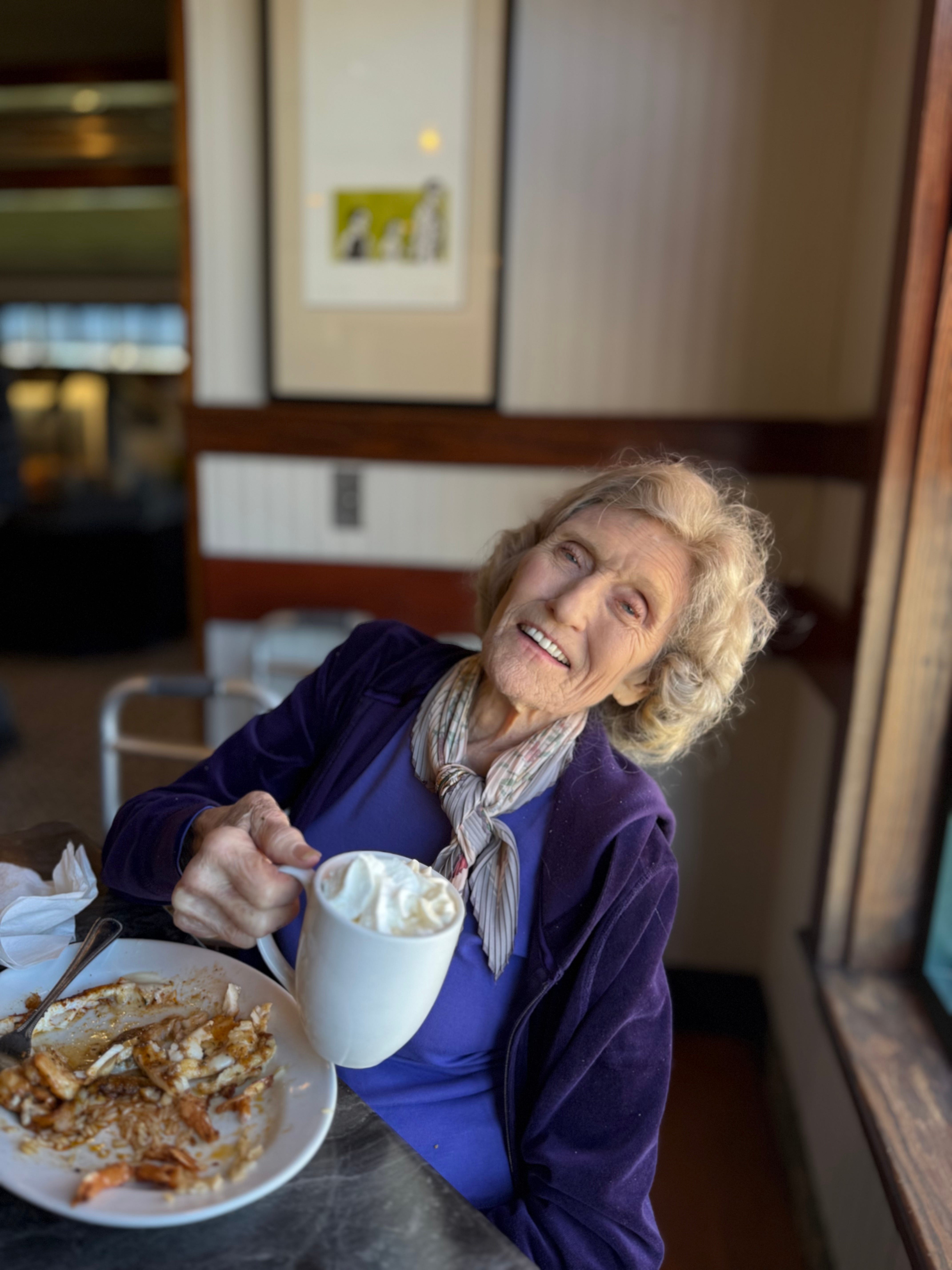
At lunch recently.
It’s hard to experience the decline, but most people wind up that way unless they die first. It would be nice if they had a treatment or cure for dementia, but they really don’t: Last fall after an extensive examination at the Pat Summit Center, they diagnosed her with moderate-to-severe Alzheimers; my mom, not too far gone to ask questions, said all this diagnosis is nice but can you do anything to make me better?
No, said the neurologist, looking a bit sheepish. No, we really can’t.
In Canada or the Netherlands they’d probably be wanting to euthanize her, but her life is not “life unworthy of life.” She enjoys her days most of the time, she’s made friends at the facility, and she has her family. That’s not so bad. And fortunately, the very cheapness that sometimes irritated me in my youth (Kmart brand ketchup was not as good as Heinz) means that she has plenty of savings, and an excellent long-term care policy, so good, as the guy at the insurance company told me, that they haven’t sold anything like it in years.
Life is what it is, and this is her life, and mine, and my siblings’. I should note that Helen is super-good with her. My mom and Helen were never at odds, but weren’t particularly close for many years, but now get along great, with my mom always asking me to bring Helen along for lunch. Helen’s clinical skills, and general awesomeness, make her a great conversationalist for someone with dementia, not least because she’s just not put off by it as many people are.
If some of you are, or will be, dealing with this stuff I hope these observations will be useful. If not, well, good for you!
Thanks for posting this. I’m 81 and the wife is 79. Our parents passed on years ago and neither of us experienced this illness with them. Our main concern is us as we age. We do very well but are concerned with missing a step or two in the future. We made promises to not hesitate if this were to occur. I still do our taxes and am pretty hi tech for 81. Cathy is too. This article just increased our awareness of what could be. Bless you for being so attentive to your mom.
Dear Glenn, this is a very important piece. Thank you. Jason