


Is it the best of times, or the worst of times?
How about “yes.”
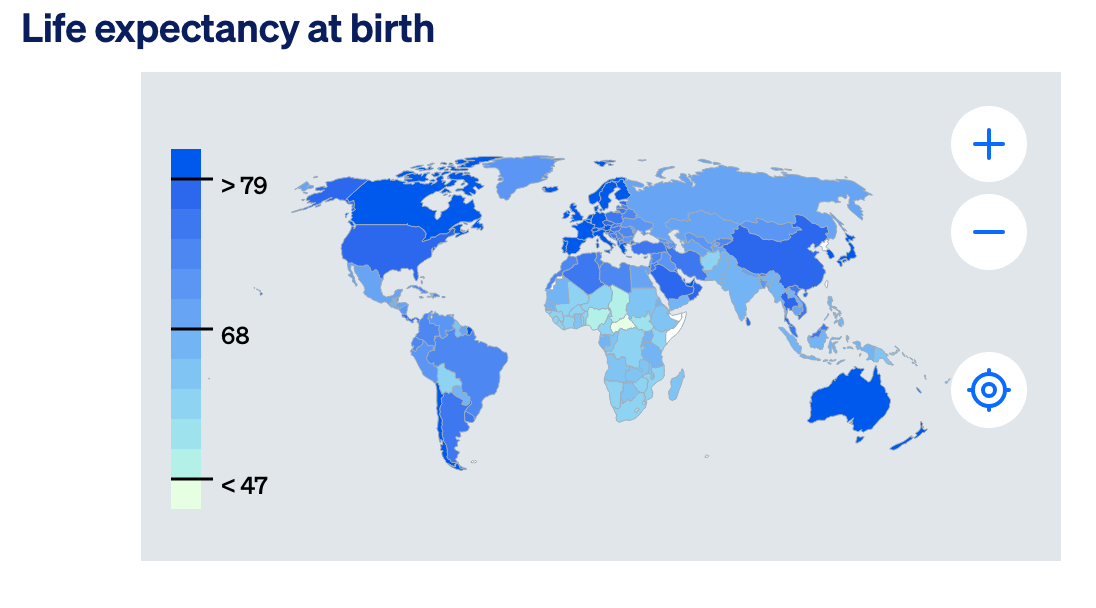
On the one hand, diseases are being cured — the GLP class of drugs seem not only to treat obesity, but dementia, addiction, and perhaps even aging — which is fortunate since, for the first time in human history, the single most widespread health problem isn’t starvation, but obesity. Transplants have gone from nonexistent, to rare, to commonplace. Lifespans, and particularly healthspans, are improved.
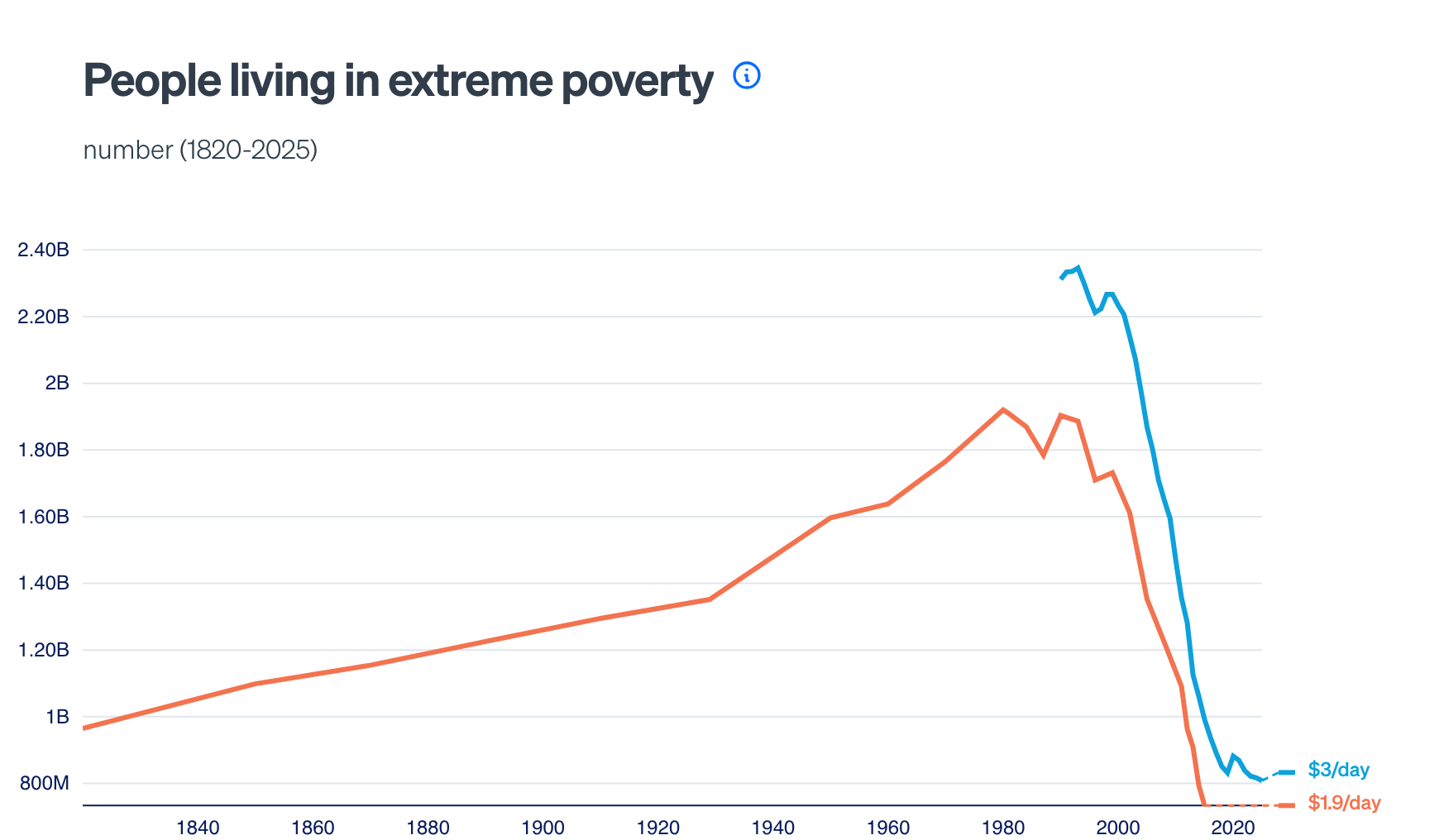
Poverty is shrinking:
Humanity is expanding into space, fulfilling the dreams of my youth and offering a better chance of surviving catastrophic disasters or wars.


Leftist dictatorships have been falling throughout South and Central America. Argentina is proving that free market governments work.
And AI and robotics offer the prospect of enormous wealth for all humanity.
On the other hand. . . . AI and robotics, along with ubiquitous surveillance, offer the prospect of extremely effective dictatorship.
Medical research has made people live longer, but the last global plague came out of a government-funded research lab — and it’s not 100% certain that it was an accident. Even if it was an accident, it was the product of “gain of function” research, which was designed to make viruses more dangerous and contagious. What could come next, especially when so many of the people involved in this kind of work seem to have a low opinion of humanity in general? (See also many of the people involved in AI.)
Global elites seem threatened by democracy and are working, all over the planet, to tame or neuter it, at the very least.
Europe is rattling sabers again, with European governments telling their populations to prepare for war, presumably with Russia. (You can tell they’re serious, because their military releases suddenly feature white male soldiers).


Likewise, China continues to threaten Taiwan, and Iran, though largely neutered, has not given up in the Gulf. A war with China or Russia will probably start with drone attacks on lots of rear-area power plants, refineries, oil storage facilities, and food warehouses. These drones will probably be transported en masse onboard what look like commercial vessels or trucks. Studies done back in the 1980s suggested that a relatively small number of nuclear strikes targeting liquid fuel production and distribution could crash the U.S. economy almost to medieval levels. (The original study link is here, but it’s nonfunctional. The archive link shows as blocked.) Here’s what a New York Times report said: “The study, by the Massachusetts Institute of Technology, said an attack aimed only at liquid fuels and their distribution points could cripple transportation, energy production and key industries, damaging the economy so thoroughly that most of the population would die of starvation in months. The survivors, it said, would be reduced to ‘near-medieval levels of existence’ for decades.”
One suspects that properly targeted drone swarms could achieve similar results, though I doubt recovery would take decades. But years would be bad enough, and it would only take months for people to starve.
The U.S. national debt has been unsustainable for years, but at some point — absent crazy economic growth from AI and robots — it will stop being sustained. I used to worry about it. I still do, kinda, but I’ve resigned myself to the fact that nothing will be done without a crisis.
So, the best of times and the worst of times. Well, you know, you could have written something similar in the 1950s, with the threat of global thermonuclear war constantly looming. (And it almost happened, by accident, more than once.) Even as rapid progress in jets, antibiotics, vaccines, and more looked good. Now the 50s are remembered as a halcyon period, because we survived them.
I predict that we will survive this period, too. It’s not guaranteed, but that’s how I feel. Despite everything, my gut tells me that the good news is gathering steam, and the bad stuff — and bad people — despite a lot of kicking and screaming and plotting, are headed toward the dustbin of history.
At any rate, there’s no point getting too depressed. When I was a kid some people weren’t having kids because they didn’t want to bring a child into a world that might have a nuclear war. Later it was because they didn’t want a child to suffer under “climate change.” Everyone who ignored that advice did better than everyone who listened. Likewise, planning for a good, or at least tolerable, future, is better than expecting an awful one.
That’s my advice, anyway. But, you know, I always keep a bottle of chilled champagne on hand, just waiting for something to celebrate. And when I visited a friend after a sad event, I took them a bottle and told them to set it aside for when good things happened in the future, because they would. And, later, they did and they even called me to tell me they drank it. That’s faith in the future, and so far it’s worked out for me pretty well.
Very enjoyable read. I’m 81, pretty good health, with a great outlook on my future years, however few, remain on this side of eternity. Just bought a new Tesla Y with FSD and know it will bring me home if I forget where home is. Life’s good!
"my gut tells me that the good news is gathering steam, and the bad stuff — and bad people — despite a lot of kicking and screaming and plotting, are headed toward the dustbin of history."
------
I'd love to see a column expanding on this thought.